
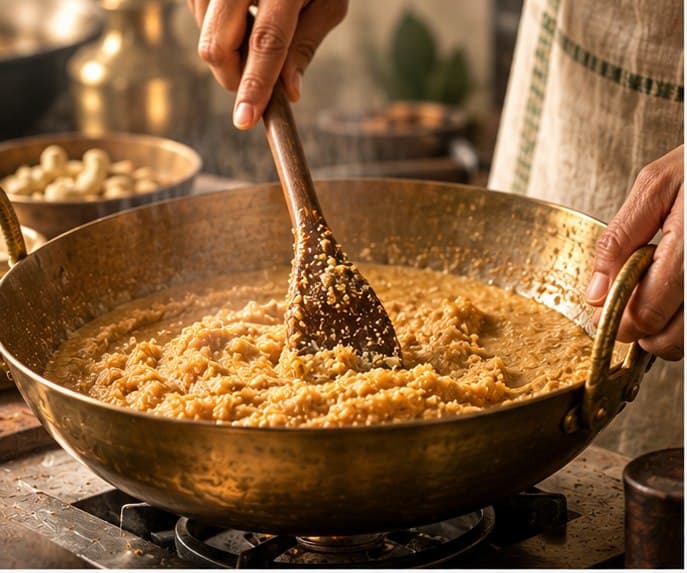
Walk through the sweets aisle of most stores today and you'll find a quiet substitution happening in plenty of packaged mithai: vegetable oil or vanaspati standing in for ghee. It's cheaper, it has a longer shelf life, and most people won't notice from the ingredient list alone. But they notice in the eating.
It's not just about flavour
Ghee does more than taste rich. It carries flavour differently than a neutral oil does, it firms up and softens with temperature in a way that gives mithai its characteristic texture, and it's what lets a sweet hold its shape on a plate without turning greasy or waxy. Swap it out, and you can dial back the cost — but you're also dialing back the reason the sweet tasted like something worth making in the first place.
This isn't a new discovery. It's just what every home kitchen in India already knew before packaged mithai existed at all: you cooked with ghee because that's what made it taste right, full stop.
Where Nouriqo lands on this
We didn't set out to make a health claim here — we set out to make papri that tastes like it's supposed to. That meant sticking with real desi ghee, real cashews, almonds, and pistachios, and skipping the maida and preservatives that let other packaged sweets sit on a shelf indefinitely. It's less a philosophy than a refusal to take the easier, blander shortcut.